

Monitoring modernization doesn’t have to begin with a rip-and-replace project. For many IT teams, it starts with a specific need: better visibility, stronger historical context, more useful alerting, or capabilities their current tools simply don’t provide.
From there, modernization can happen in stages. Teams can address their most important gaps first, build experience with new capabilities in their own environment, and make informed decisions about what to keep, replace, or consolidate over time.
We recently sat down with IT professionals who have taken that path. Their monitoring environment evolved from adding new capabilities alongside existing tools to eventually completing a large-scale platform migration.
We asked them one question:
What would you tell another IT leader who was just getting started?
Their experience surfaced six practical lessons for approaching monitoring modernization with a clearer strategy, from deciding where to start and avoiding legacy technical debt to managing migration risk and continuing to evolve after go-live.
1. Monitoring Modernization Doesn’t Require Replacing Everything
There’s a tendency to think about monitoring modernization as a platform decision: keep what you have or replace it. In practice, there is often room between those two options.
One organization we spoke with initially introduced Galileo alongside its existing SolarWinds environment. The immediate objective wasn’t to replace SolarWinds. It was to gain capabilities the team needed in areas such as deeper infrastructure observability, historical performance analysis, trend analysis, and long-term capacity planning.
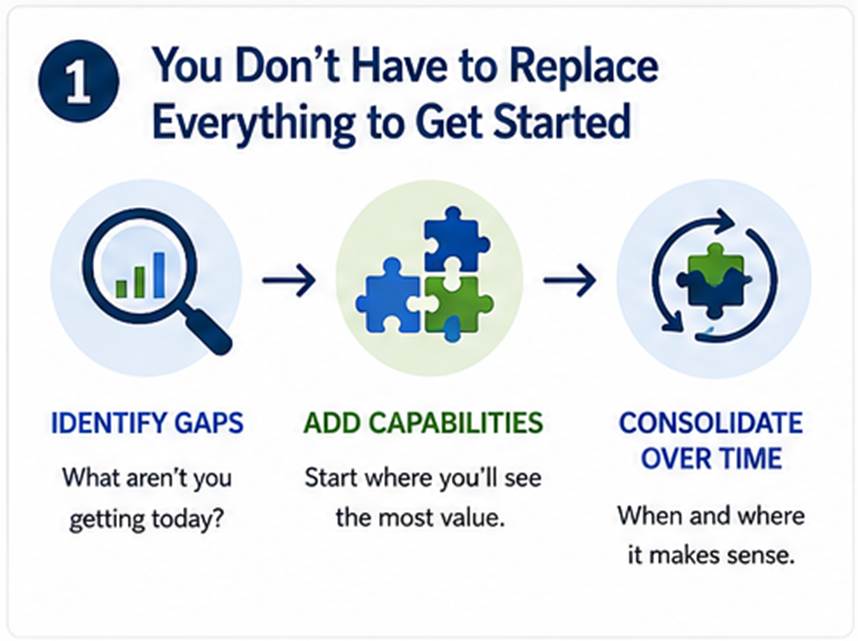
That gave the organization an opportunity to begin modernizing without waiting for its next monitoring renewal or committing to a wholesale migration.
Over time, requirements changed. The team became more familiar with what was possible, expanded its use of Galileo, and ultimately reached the point where replacing SolarWinds made sense.
Don't make replacement a prerequisite for modernization.
If your existing tools are doing some things well but leaving important gaps, start with the gaps. Add the capabilities that will make the biggest difference today and give yourself the flexibility to decide what should stay, what should go, and what should be consolidated over time.
2. Define Your Monitoring Modernization Priorities
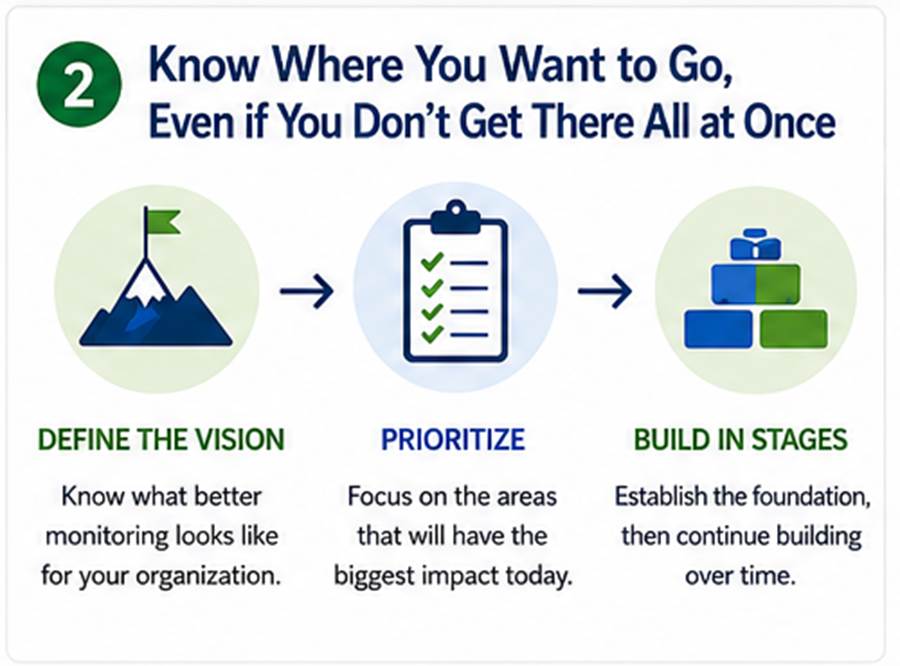
Modernization doesn’t require implementing every capability on Day One, but it does require knowing what you’re trying to accomplish.
Before introducing new technology, identify what better monitoring should look like for your organization. Are you trying to:
- Improve infrastructure visibility?
- Become more proactive?
- Reduce alert noise?
- Improve capacity planning?
- Give operations teams better troubleshooting data?
- Understand dependencies across infrastructure and applications?
Those priorities should shape your monitoring modernization roadmap and help determine which capabilities need to come first.
When the organization we interviewed ultimately moved away from SolarWinds, it was working within a very aggressive timeframe. That meant some capabilities had to come later. Deeper SQL Server monitoring, for example, continued to be implemented after the initial cutover.
The phased implementation allowed the team to establish the most important capabilities first while continuing to build toward its broader monitoring goals.
Establish the foundation first. Prioritize what matters most. Then continue building.
3. Use Monitoring Modernization to Leave Technical Debt Behind
When it does become time to replace or consolidate an existing monitoring platform, resist the temptation to simply recreate it.
That was one of the most important realizations for the team we interviewed.
Initially, the plan was to move quickly and perform something close to a like-for-like replacement of SolarWinds. But as implementation progressed, the team reconsidered.
As one engineer explained:
“Once we started using [Galileo] more and more, it’s like, hey, all this functionality that we would have revisited, it’s already there. Let’s just start net new and not bring any of that tech debt that we might have with [our legacy platform] over to the new platform.”
Years of monitoring tend to leave behind accumulated dashboards, thresholds, configurations, and practices. Some remain essential. Others exist because they’ve always existed.
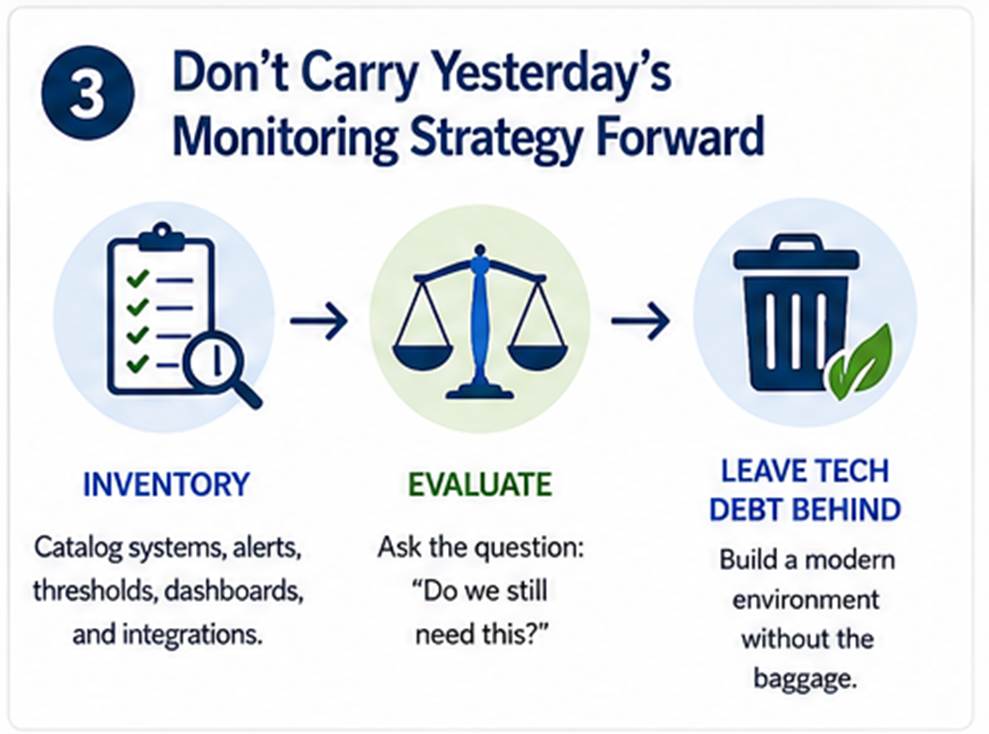
Modernization is a rare opportunity to leave technical debt behind.
Before carrying them forward, ask:
Do we still need this?
Start with a thorough inventory of systems, alerts, thresholds, integrations, and workflows. Understand what you have, but don’t assume everything deserves a place in the future environment.
Modernization is a rare opportunity to leave technical debt behind.
4. Build Confidence Before You Consolidate
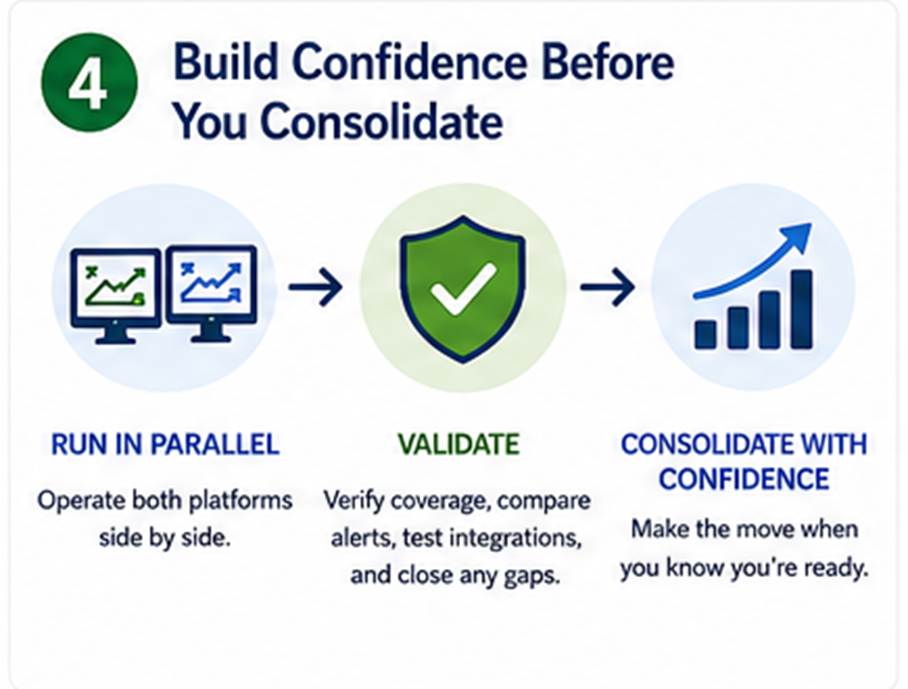
Running monitoring platforms side by side can be valuable for reasons that go well beyond migration. For teams taking a phased approach to monitoring modernization, that overlap can also provide valuable operational validation.
It gives teams an opportunity to experience new capabilities in their own environment, compare results, build operational familiarity, and reduce the risk associated with eventual consolidation.
When the customer reached the point of replacing SolarWinds, the team ran both platforms in parallel until cutover.
“We ran both of them in parallel pretty much until the day we officially went live.”
That allowed the team to verify that systems were covered, validate ServiceNow integration, compare alerts, and make sure shutting down the incumbent platform wouldn’t create new blind spots.
They also discovered that the new environment was identifying conditions that hadn't previously been monitored and, in some cases, detecting issues faster.
By the time the legacy platform was turned off, the team had already validated the new approach in its own production environment.
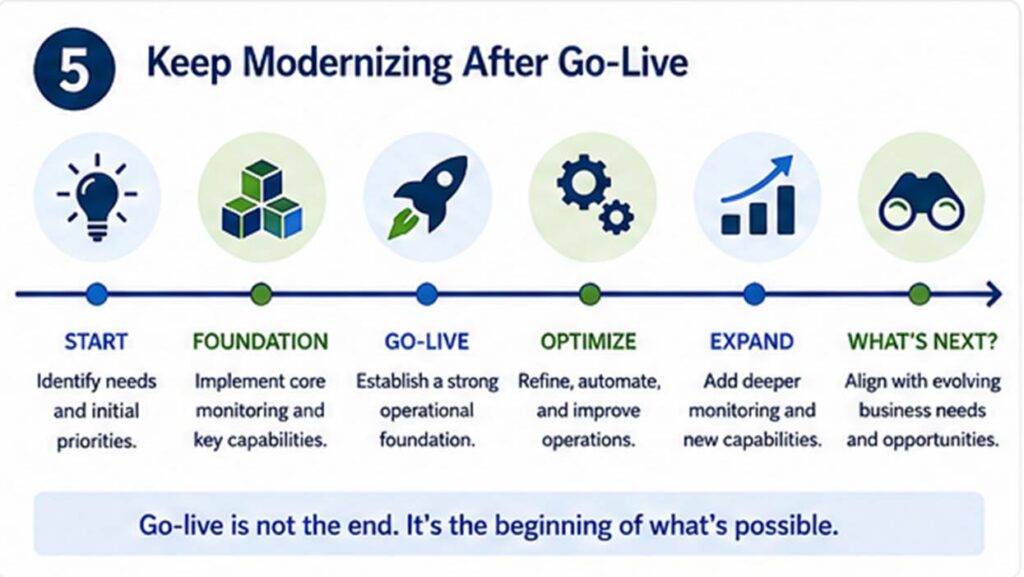
5. Keep Your Monitoring Modernization Roadmap Moving
There is no single date on which monitoring suddenly becomes “modern.”
Infrastructure changes. Applications change. Business priorities change. And the way you monitor them should continue changing too.
Once the immediate migration was complete, they continued adding capabilities and looking for ways to get more from the platform. Deeper database monitoring was one example. Their longer-term vision extends much further.
As one team member acknowledged, the challenge after implementation is finding the time to keep asking:
“Maybe we should improve this. We should try this as well.”
Go-live should establish a strong operational foundation, not freeze your monitoring strategy in time.
Create a roadmap for what comes next and revisit it regularly. The capabilities you need six months from now may be different from the ones that got the project started.
6. You Don’t Have to Modernize Alone
Technology was only part of what made this particular project successful.
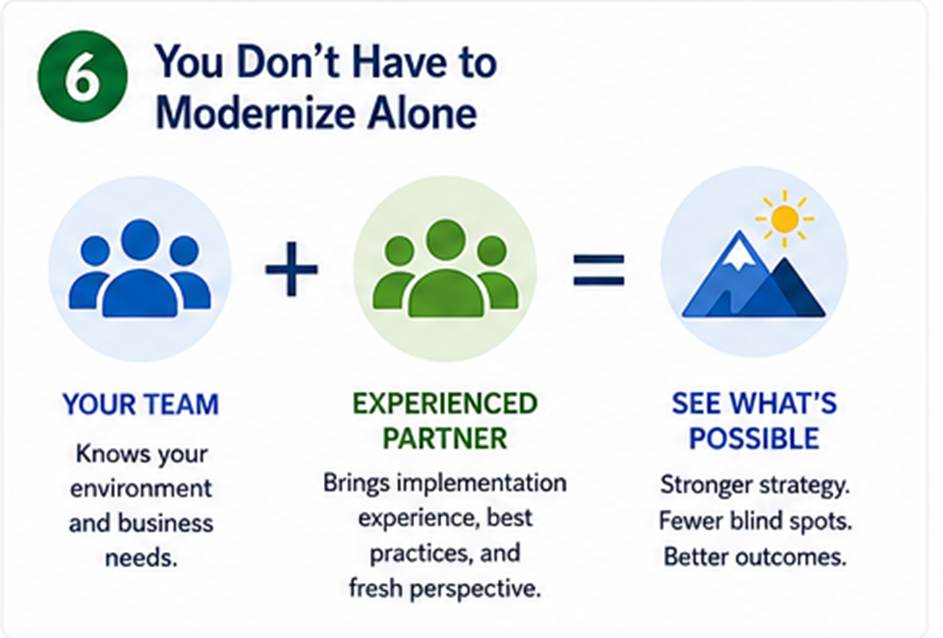
Throughout planning and implementation, the internal IT team worked closely with Galileo engineers. The customer brought deep knowledge of its environment. The implementation team brought experience from other monitoring projects and identified considerations the internal team had not encountered.
One engineer described it this way:
“Internally we had a pretty good idea of what we had to do, but there are some things that we, I think, missed at the time that [the Galileo engineers] brought up when we started planning it out.”
And perhaps the best summary came a few minutes later:
“If we weren’t thinking of something, you guys were.”
That outside perspective can be especially valuable when modernization is happening in stages.
An experienced partner can help identify where to start, determine what can wait, avoid common pitfalls, and keep the larger strategy in view while individual projects move forward.
That combination of internal knowledge and outside implementation experience can help teams make better decisions about what to prioritize now and what to build toward next.
Where Can Monitoring Modernization Lead Next?
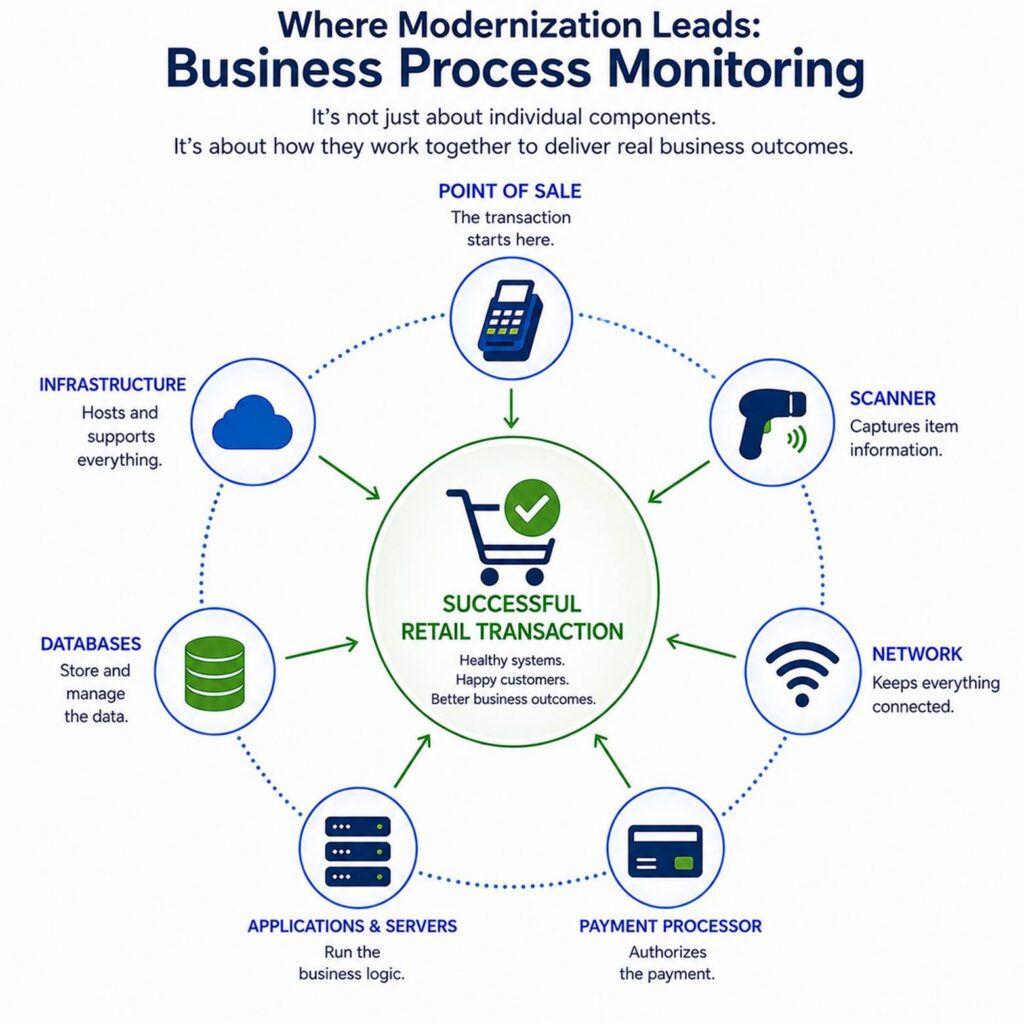
There may not be one answer. For the IT team we interviewed, the next frontier is business process monitoring.
Instead of looking only at whether individual infrastructure components are healthy, they’re beginning to think about how those components work together to support an actual business outcome.
Consider a retail transaction.
The point-of-sale device may be working. But completing the transaction also depends on the scanner, network connectivity, payment processor, backend servers, applications, databases, and other infrastructure working together.
If one component fails, the business process may be degraded even though much of the underlying infrastructure still appears healthy.
The team’s vision is to bring those individual signals together so operations can understand the health of the overall process, not simply the health of each component.
That vision extends well beyond basic up/down monitoring, and the team did not have to get there all at once.
They started with the capabilities they needed, expanded over time, consolidated when it made sense, and continue to evaluate how monitoring can better support the business.
That may be the most important lesson from the trenches:
Monitoring modernization is a progression. It can start with a specific operational need and evolve as your infrastructure, priorities, and requirements change.
Start where you are. Solve the problems that matter most. Build on what works. And modernize at the pace that makes sense for your organization.
Ready to Modernize at Your Own Pace?
Monitoring modernization can begin before your next renewal and without immediately replacing the tools you already have.
Galileo can help you assess your current environment, identify gaps and opportunities, and determine where it makes sense to start. Add the capabilities you need today, build from there, and consolidate when the time is right.